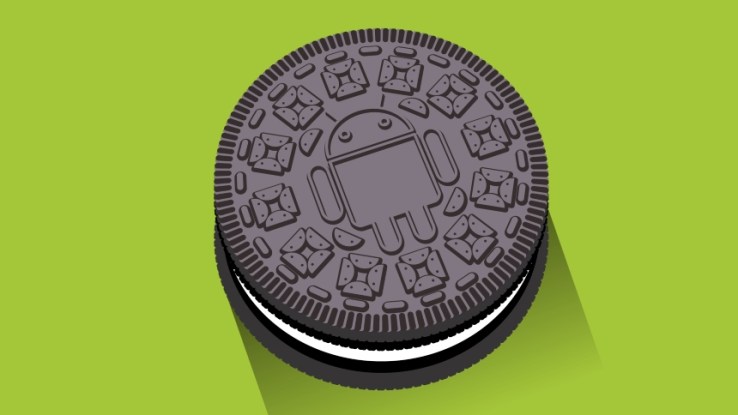
So, when will your device actually get Android Oreo?


Google officially just took the wraps off of Android Oreo, but there are still some questions left to be answered — most notably, precisely when each device will be getting the latest version of the mobile operating system. Due to Android’s openness and a variety of different factors on the manufacturing side, it’s not an easy question to answer, but we’ll break it down best we can.

First the good news: If your device was enrolled in the Android Beta Program, you’ll be getting your hands on the final version of the software “soon,” according to Google. Exactly what that means remains to be seen, but rest assured that you’ll be one of of the first people outside of Google to take advantage of picture-in-picture, notification dots and the like.

No big surprise, Google handsets will be the first non-beta phones to get the update. The Pixel, Nexus 5X and 6P are at the top of the list, alongside Pixel C tablet and ASUS’s Nexus Player set-top box, which will be receiving the upgrade in spite of being discontinued late last year.

Beyond that, the answer differs greatly from company to company. In most cases, the latest flagship is a no-brainer for an upgrade, and there may even be a handful of devices announced at IFA in a few weeks that will ship with the update out of the box. We’ve reached out to the manufacturers to find out what to expect.

BlackBerry: A spokesperson for TCL/BlackBerry told us, “I can confirm that BlackBerry KEYone will get the upgrade.” No date listed.

HTC: Similarly, a spokesperson confirmed that the U11 will indeed be getting Oreo eventually, though, “We haven’t announced timing yet. More info to come in the future.”

LG: The company is certainly bullish about the new operating system, tweeting out an Oreo/eclipse teaser ahead of the event. Compatibility seems like a no-brainer for the forthcoming V30, along with recent flagships, though the company has yet to confirm

Motorola: Motorola is similarly committed to bringing Oreo to its flagships, but sounds even more cautious with regards to timing. “Once Android O is fully released,” a spokesperson told TechCrunch, “we will begin working on the new code for our devices – as always, we know upgrades are about getting it right and making sure the phone performance remains the best it can be.”

OnePlus: The company has already semi-officially announced that the new OS will arrive on the 3 and 3T this year— presumably the OnePlus 5 will be getting it around then, as well.

Samsung: As always, Samsung does things on its own schedule — though it seems pretty likely that the big flagships, including the S8 and the forthcoming Note 8, will get it. Perhaps we’ll hear more on the latter at this week’s Unpacked event.

Sony: The company has yet to issue an official statement with regards to when its Xperia line will be getting the upgrade, but the Xperia X, XZ and XA seem like likely first candidates.

We’ll be updating this story as more manufacturers respond to our request.

Comments

Popular posts from this blog

The EHang 184 Is A Human-Sized Drone Taking Off At CES

We’ve seen some pretty cool stuff on day 1 of CES 2016, but probably nothing more eye-catching than the EHang 184, a human-sized drone built by the Chinese UAV company  EHang . Yes you heard right — a giant autonomous drone that fits a human. It’s basically what you would expect to see if someone shrunk you down to the size of a LEGO and stuck you next to a DJI Inspire. Except no one was shrunk, and the giant flying machine was sitting smack in the middle of the CES drone section. EHang, which was founded in 2014 and has raised about $50M in venture fundingto date, was pretty gung-ho about telling everyone at CES that the 184 was the future of personal transport. And for the most part, people were too in awe to question them. But the reality is that the company probably was using the 184 as more of a marketing tool for their standard-sized drones like the  Ghost . Not that we’re saying that the 184 will never be a real thing, just that it probably isn’t co...

How ad-free subscriptions could solve Facebook

At the core of Facebook’s “well-being” problem is that its business is directly coupled with total time spent on its apps. The more hours you pass on the social network, the more ads you see and click, the more money it earns. That puts its plan to make using Facebook healthier at odds with its finances, restricting how far it’s willing to go to protect us from the harms of over use. The advertising-supported model comes with some big benefits, though. Facebook CEO Mark Zuckerberg has repeatedly said that “We will always keep Facebook a free service for everyone.” Ads lets Facebook remain free for those who don’t want to pay, and more importantly, for those around the world who couldn’t afford to. Ads pay for Facebook to keep the lights on, research and develop new technologies, and profit handsomely in a way that attracts top talent and further investment. More affluent users with more buying power in markets like the US, UK, and Canada command higher ad prices, effectively...

Building a smarter home

The Jetsons  presented a highly entertaining vision of what  homes  of the future would  look like . The animated television show anticipated a world where humans would be able to do everything with just the push of a button. In many ways, the show turned out to be prophetic; today we have printable food, video chats, smartwatches and robots that help with housework — and flying cars may even be on the way. The challenge for companies is to integrate digital technologies in meaningful ways that enhance people’s  homes  and improve their lives. Many of the innovations to emerge over the past few years have been geared toward this kind of “push-button living.” Thanks to the rise of smartphones and the proliferation of cheap sensors, it is possible to make just about any household appliance “smart” and “connected.” By 2019,  companies are expected to ship 1.9 billion connected home devices, bringing in about $490 billion in revenue. ...

NVBOTS Wants To Make 3D Printers As Easy As Toasters

Right now 3D printing curriculums, if they exist, are fairly sparse. Putting a two thousand dollar machine in front of a grade schooler usually ends up in a lot of 3D printed Yoda heads and not much education while the learning curve for most 3D design tools is steep. That’s what the founders of NVBOTS, AJ Perez, Forrest Pieper, Christopher Haid, and Mateo Peña Doll, are looking to solve. Their product, the  NVPRO , is a 3D printer with a few interesting features. The two most interesting are the automatic removal system which pops parts off of the build plate when they are done and a built-in print server that allows you to print from any device. This means you can run large batches of prints from different users with each part popping off as its printed. This means a class of students can send jobs to a printer and then pick them up just as they would a laser printer. The printer also supports a central “admin” who can check jobs before they are printed as and offers a ...