SpaceX successfully launches SES-9 into GEO but crash lands rocket on drone ship


Today at 6:35pm EST, SpaceX successfully launched the SES-9 communications satellite into Geostationary orbit (GEO).
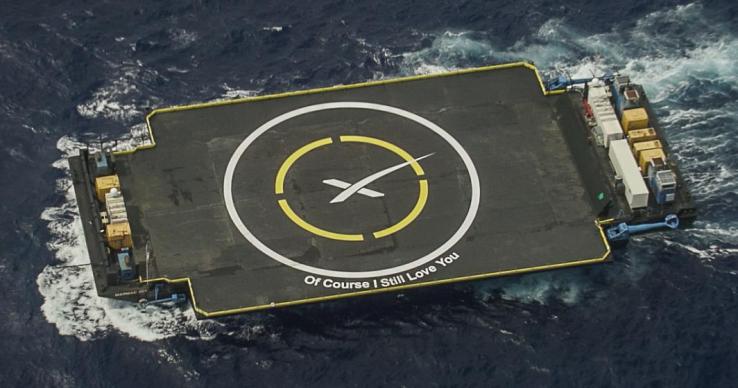
Launching the SES-9 payload was the primary goal of today’s mission, but many had their eyes back on the ground for what would have been the first successful landing of a rocket on a drone ship in the ocean. Unfortunately, however, the rocket landing was unsuccessful.

SpaceX had repeatedly set expectations low for this particular rocket recovery attempt.
Characteristics of today’s mission made rocket recovery more difficult for a couple different reasons. First, the speed of this particular rocket was considerably faster than previous landing attempts.
Second, the landing attempt was made on a floating drone ship at sea rather than on a stable platform on land, which is how SpaceX’s first successful rocket recovery was completed.
Rocket speed was greater because the mission required SpaceX to send its payload into GEO, which is about 100 times higher than Low Earth Orbit (LEO) where other SpaceX payloads have been placed.

SpaceX’s last rocket recovery attempt, made in January, was on a mission that sent a satellite into LEO and therefore required a lower speed. That landing was alsounsuccessful, but the rocket did soft land on its target and only fell over because one of the rocket’s support legs failed to lock upon touchdown.
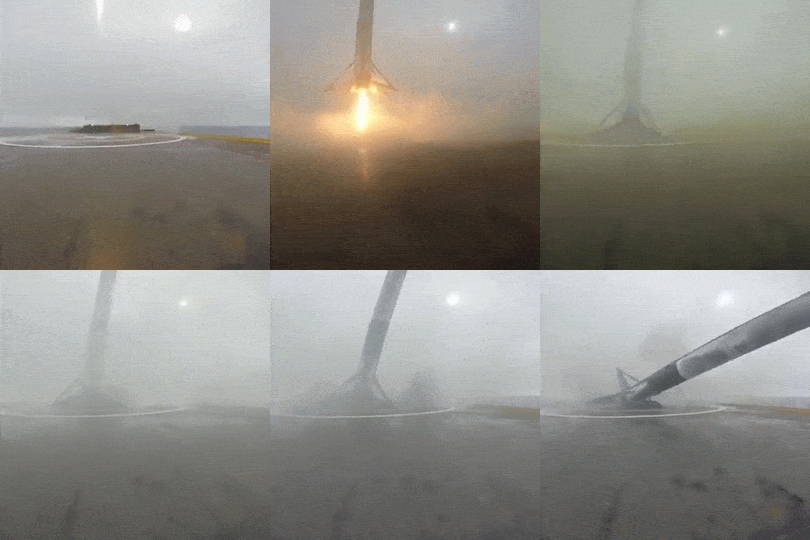
SpaceX landing attempt after Jason-3 mission in January / Courtesy of SpaceX
Drone ship rocket landings are also inherently more difficult than land-based recovery attempts, but for certain missions – like the one today – that’s the only option.

As seen in the video above, the live stream of the drone ship landing cut out just as the rocket appeared in the video.
SpaceX has experienced challenges with their drone ship video connection in the past as well. The video feed requires a constant satellite connection and because the drone ship is constantly moving that connection is hard to maintain. As the rocket comes in for landing, it can shake the drone ship, making it even harder to maintain this connection.
Two earlier launch attempts on February 24th and 25th were scrubbed because of concerns with SpaceX’s super-chilled liquid oxygen propellant.
A third launch attempt on February 28th was delayed due to safety reasons because a boat strayed within range of the launch site. If anything were to happen to the SpaceX vehicle after launch while the rocket was over the water, it could potentially be extremely dangerous to boats within a specified range.
After the boat had moved and it was safe to launch, SpaceX began launch procedures, but aborted in the final seconds of countdown because of a low thrust sensor alarm.

A fourth launch was scheduled for March 1st, but upper winds were too high to launch.
With SES-9 safely placed in GEO, the fifth time was a charm and today’s mission by all accounts was a success. According to Musk, SpaceX’s next mission will have a better chance for a rocket recovery.

Comments

Popular posts from this blog

What is your preferred smartphone screen size

Screen envy. We all have it. Or do we? See, that’s the thing, I’m just not so sure. One thing I am sure about is that our phone screens have gotten progressively bigger and bigger over the last few years. The funny thing is, we as a society have taken that ball and run with it, like we just don’t care. But I always thought we did care? Some time ago, when phones were in the sub-5” range, we used to have a term called “phablet” which described an almost absurdly big phone. The definition varied from person to person. I always considered a phone with a screen 5.5” or bigger to be a phablet. The Galaxy Note fell into that category. The Lumia 1520 certainly did. There are others as well. I was safely ensconced in the 4.5” area at the time with my Lumia 920. What did I know? Leon’s getting laaaaaaaarrrger But slowly, phones started topping the 5” mark. I’m not talking about phablets here, I’m talking about normal flagship phones – the Galaxy S4 (barely) and the HTC One (M7) are ...

Facebook Now Supports PGP To Send You Encrypted Emails

You can now instruct Facebook to encrypt every email it sends to you so nobody — not even the NSA — is likely to be able to read your messages anytime soon. All you have to do is import your public PGP key into your Facebook settings and you’re good to go. The problem here, of course, is that most people have no idea how public/private key email encryption works and how to even get started with it. In the wake of Edward Snowden’s leaks, a number of organizations, including Google, promised to completely hide the complexities of end-to-end email encryption from regular users. Very few of these products have materialized so far, however — not for lack of trying, but because this is actually a very complex problem, both from a technical and user experience perspective. Facebook uses the well-established PGP scheme (the GNU Privacy Guard implementation of  OpenPGP, to be precise) to encrypt messages and tools lik...

Best Web Design Company in Pondicherry

#Technology    has two faces. We all feel it, but sometimes can’t find words to describe it.  #Ebooks    are the best example to show the 0-1 nature of emotions the  #technology  evokes. #itwhere    provide a  #Best     #solutions    to  #Growyourbusiness    feel free to drop a  #Mail    info@itwheretech.co.in www.itwheretech.co.in 

Facebook will verify the location of U.S. election ad buyers by mailing them postcards

Facebook’s global director of policy programs says it will start sending postcards by snail mail to verify buyers of ads related to United States elections. Katie Harbath, who described the plan at a conference held by the National Association of Secretaries of State this weekend, didn’t reveal when the program will start, but told Reuters that it would be before the Congressional midterm elections in November. The cards will be sent to people who want to purchase ads that mention candidates running for federal offices, but not issue-based political ads, Harbath said, and contain a code that buyers need to enter to verify that they are in the U.S. The program is similar to ones used by Google My Business and Nextdoor when they need to verify business owners or users who want to join closed neighborhood groups, respectively. Harbath told Reuters that the postcards “won’t solve everything,” but were the most effective method the company came up with to prevent people from using fa...

eGym raises $45M Series C for cloud-connected gym equipment and fitness software

eGym , the Munich-based startup that offers cloud-connected gym equipment and supporting cloud software and app for the fitness training floor, has closed $45 million in Series C funding. The round was led by new investor HPE Growth Capital, while existing investors, including Highland Europe, also participated. The problem that eGym is looking to solve is that, whilst gyms have moved from a bodybuilder market to a mass market in the last 20 years, the technology in gyms lags behind. That’s despite the fact that better use of technology can help to reduce customer churn, the biggest pain-point of both gym operator and gym users. Comprising of an app for both gym user and trainer, combined with the company’s connected strength machines, the eGym Cloud makes it possible for gym members to receive better fitness instruction and an evolving and personalised fitness plan based on data collected as they workout. And by providing a better workout feedback loop, gym goers can get an i...