APX Labs Grabs $13 Million For Enterprise Smart Glasses Platform


APX Labs, makers of the Skylight smart glasses development platform, announced a $13 million investment today.
The round was led by NEA, but there were several others parties involved including CNF Investments, GE Ventures, Salesforce Ventures, SineWave Ventures, and other unnamed investors. Today’s round brings the total raised to $29 million.
While the company was happy about the money, CEO Brian Ballard, seemed most excited by the strategic investments from GE Ventures and Salesforce Ventures, which he felt really validated what the company was trying to do.
GE is a customer and they are going to do a large deployment within the next 12 months that will be a serious test case for the platform.
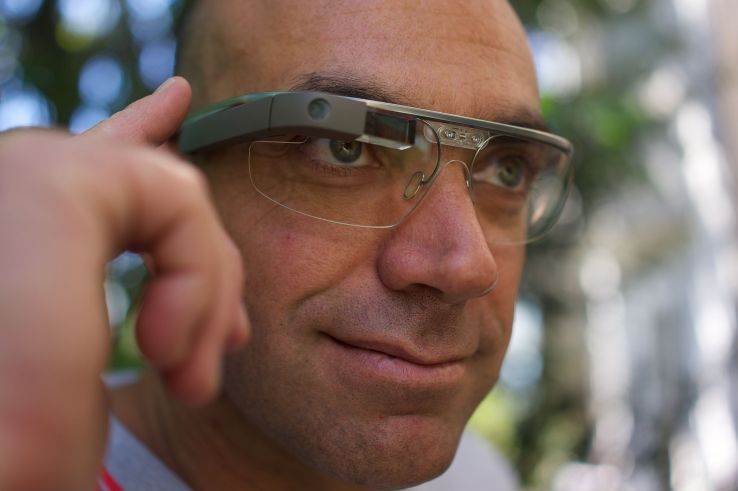
SkyLight is a vendor-agnostic smart glasses platform. That means it works across a variety of glasses manufacturers including Google Glass, which is focusing on enterprise use cases for now and others like Sony Smart Eye Glasses, among others.

Assorted smart glasses
Photo Credit: APX Labs

The hardware when used in conjunction with the Skylight software enables employees working in any industrial scenario to get instructions via the smart glasses interface while keeping their hands free.
APX Skylight interface example.
Skylight interface example. Photo Credit: APX Labs

As for Salesforce, it sees smart glasses as the interface for the internet of Things, a trend it has made clear it is very much interested in. For now, Salesforce wants to push smart glasses technology to field service workers as a way to undertake repairs in the field hands-free.
You can imagine, there are any number of scenarios where this could be useful for these companies. For example, at GE you have people working on huge industrial equipment like locomotives, jet engines and wind turbines. Using smart glasses with Skylight, they are able to assess the situation, while getting information via a smart glasses interface with their hands free. It’s clear how this would be much more efficient than working with a tablet or laptop.
In some scenarios where a worker may be in a hazmat suit or inside a large machine, working with a laptop or tablet isn’t even possible. The smart glasses enable the worker to get information directly through the glasses.
Ballard sees this industry just beginning to emerge from first generation hardware and software, and moving into some larger scale deployments, like his company’s work with GE.
They currently claim to have dozens of customers including six out of the Fortune 10. Ballard wouldn’t name them all, although GE is one. Regardless, those are some serious players interested in this technology, and it shows that the market could poised to take off in a big way.
“Our target now is the biggest manufacturers on the planet,” he said.
The company also has some impressive partners to help build that market including Microsoft, Accenture, SAP and Deloitte.
It’s still early days for the Herndon, Virginia company, but Ballard hopes to use this money to continue developing the product, scaling the company to a wider market and supporting a larger number of smart glasses as they become available.

Comments

Popular posts from this blog

SoftBank Lands $236M From Alibaba And Foxconn To Bring Its Pepper Robot To The World

Remember Pepper,  the intelligent robot that SoftBank unveiled last year ? Pepper goes on sale in Japan this coming weekend, but in advance of that launch  SoftBank has revealed  that Alibaba and manufacturer Foxconn have invested $118 million each in its robotics division. That deal will give Alibaba and Foxconn 20 percent shares in SoftBank Robotics Holdings (known as SBRH), with SoftBank retaining a dominant 60 percent stake. “SoftBank, Alibaba and Foxconn will build a structure to bring Pepper and other robotics businesses to global markets, and cooperate with the aim of spreading and developing the robotics industry on a worldwide scale,” SoftBank said in its announcement. SoftBank isn’t short on money, of course — it is building up quite a portfolio of e-commerce investments across Asia — but its two partners bring know-how, strategy and global networks to the table. So, it looks like Pepper has eventual world domination plans. Or, at least, ...

How ad-free subscriptions could solve Facebook

At the core of Facebook’s “well-being” problem is that its business is directly coupled with total time spent on its apps. The more hours you pass on the social network, the more ads you see and click, the more money it earns. That puts its plan to make using Facebook healthier at odds with its finances, restricting how far it’s willing to go to protect us from the harms of over use. The advertising-supported model comes with some big benefits, though. Facebook CEO Mark Zuckerberg has repeatedly said that “We will always keep Facebook a free service for everyone.” Ads lets Facebook remain free for those who don’t want to pay, and more importantly, for those around the world who couldn’t afford to. Ads pay for Facebook to keep the lights on, research and develop new technologies, and profit handsomely in a way that attracts top talent and further investment. More affluent users with more buying power in markets like the US, UK, and Canada command higher ad prices, effectively...

Trump cites Facebook exec’s comments downplaying Russian ad influence on election

You’d be forgiven for missing Donald Trump’s multiple retweets of Facebook executive Rob Goldman over the weekend. Perhaps you were spending time with family, watching Black Panther or just attempting to forget politics for a moment by ignoring the manic flurry of social media updates from the leader of the free world. But in amongst a deluge of tweets that blamed Democrats for failing to preserve DACA, called out the FBI over the recent school shooting in Florida on the FBI and affectionately referred to a member of congress as “Liddle’ Adam Schiff, the leakin’ monster of no control,” the President cited Facebook’s VP of Ads as evidence against claims that his campaign colluded with Russia. “The Fake News Media never fails,” Trump tweeted over the weekend. “Hard to ignore this fact from the Vice President of Facebook Ads, Rob Goldman!” Trump was citing Goldman’s own Twitter dump over the past week, responding to Special Counsel Robert Mueller’s recent indictment of 13 Russian...

Apple Releases First Battery Case To Eat Third-Party Accessory Makers’ Lunch

In a surprise move, Apple just announced an external battery case for the iPhone 6s. Named the  iPhone 6s Smart Battery Case , the battery extends the battery life of your iPhone 6s by up to 25 hours. The new accessory is available in black and white for $99 starting today. Let’s start with the design. Apple is using silicone as the main material like on its other cases. The company doesn’t disclose the capacity of the battery except that you’re supposed to get 18 to 25 hours of extra battery. Like third-party battery cases, Apple uses a Lightning male port at the bottom to plug your iPhone. You can charge the case using a traditional Lightning cable — most third-party batteries rely on a microUSB cable. Apple’s accessory also works with the iPhone 6 and it looks like there isn’t a 6 Plus and 6s Plus version. The Smart Battery Case features an unfortunate hump at the back. Mophie’s  Juice Pack  design is a bit sleeker compared to Apple’s official accessory. Apple...