

F8 started with a family photo. But not of the Zuckerbergs. Of Facebook’s products. “Facebook used to be this one blue app on your phone, and now Facebook is a family of apps” said its CEO as he showed off the user counts of the different family members. Facebook Groups with 700 million. WhatsApp with 700 million. Messenger with 600 million. Instagram with 300 million. And the patriarch, Facebook, with 1.4 billion.
Rather than just being a social network, Facebook sees strength as an interconnected clan of experiences — developed in-house, acquired, and tapped in from outside.
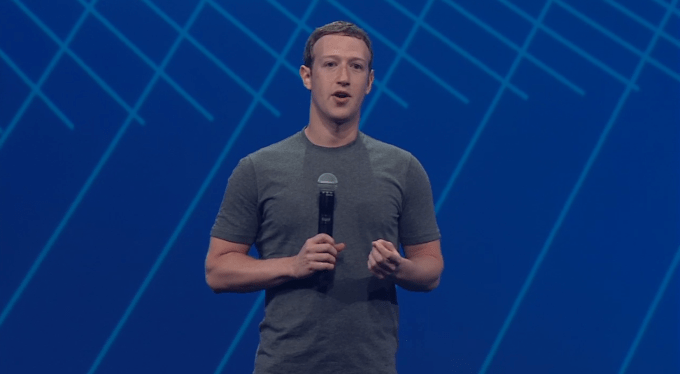
The subtext of Zuck’s “family” quote is that one app can’t do everything. On mobile, people want lean, purpose-driven experiences. Cramming everything into a one-size-fits-all can make it slow and bloated.
But when you’re talking about trying to connect every human on earth, a singularly focused app alone can’t possibly meet the diverse needs of a diverse population. Zuckerberg explained “We’re building this family so we can offer unique, world-class experiences for every way that people want to share.”
There’s safety in numbers.
Post-Facebook

An early Facebook For iOS app
Facebook was built as a website, not an app. At 11 years old, it’s downright ancient by social standards, and its age is starting to show. The popular belief is that teens are over Facebook, or at least what it used to be. Luckily, Facebook saw this coming.
The Facebook family started when it acquired Instagram, the new darling amongst youngsters alongside Snapchat. Instead of rolling it into Facebook or rebranding it as Facebook Camera, it let Instagram be Instagram. If people didn’t want to read links or deal with the personal drama of status updates on Facebook, they could just let the pretty pictures flow over their eyes.
As mobile became the dominant way people connected, Facebook saw that its messaging system’s growth was hampered by keeping it buried inside the main app.
When people are on the go, they usually need to communicate. On desktop, messaging was a feature. On mobile, Facebook realized it’s a whole app — one people might use more than the News Feed. So it spun out Messenger to great success. And it acquired WhatsApp for what seemed like a crazy $19 billion…until it became obvious that messaging was the center of the smartphone.
Zuckerberg said this morning that five years ago, most content on Facebook was text. Now it’s photos, soon it will be video, and eventually it will be immersive content like virtual reality and augmented reality. If the content sharing of the future requires a headset, Facebook needed one, so it acquired Oculus.

By starting a family, Facebook has insulated itself from disruption, now and in the future. If competitors controlled the top photo sharing or messaging app, they could use those as a wedge to pry themselves into Facebook’s core social networking ad business. But surrounded by its family, Facebook has largely managed to repel those threats.
Mark Zuckerberg declared “There are so many ways that people want to share that this family will keep growing.”
An Extended Family
Still, Facebook can’t buy or build everything. Snapchat, for example, turned down what’s reported to be at least a $3 billion acquisition offer. And when Facebook tried to clone Snapchat with Poke and then Slingshot, it failed miserably both times.
But there’s a third option beyond buy or build: partner. This was the strategy Facebook revealed today.
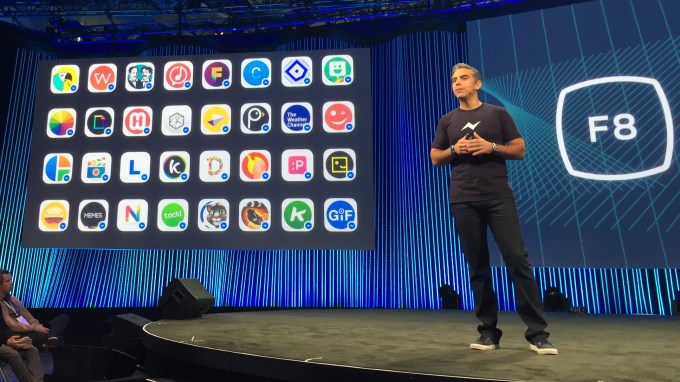
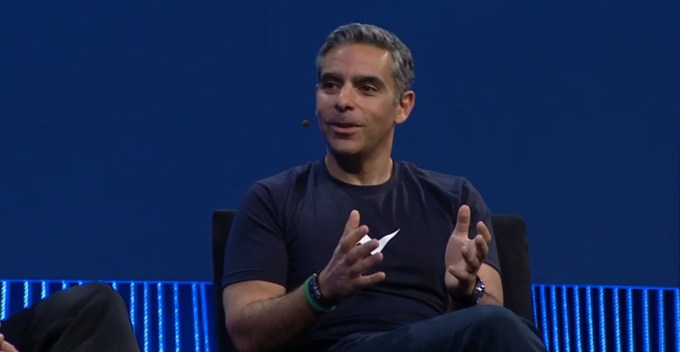
Messenger head David Marcus on stage at F8
Years ago, it came to the same conclusion on the web. It knew people wanted a wider variety of things to do on Facebook, from using utilities to playing games, but it didn’t have the time, resources, or know how to create them all in-house. That led to Facebook’s first platform. Developers got a built-in userbase, virality, and ways to make money, and Facebook soaked up all the engagement driven by the platform apps.
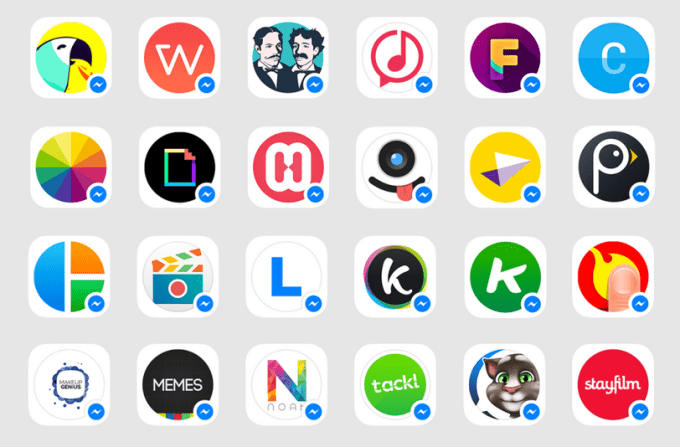
Now Facebook is doing the same on mobile with the Messenger platform. It’s extending what counts as family by inviting over 40 developers to build companion apps for creating and discovering content to be shared through Messenger. This time around, developers get help with discovery and virality, and again, Facebook gets to soak up all the engagement they lure in. Messenger usage translates to platform lock-in, driving views of Facebook’s News Feed where it shows ads.
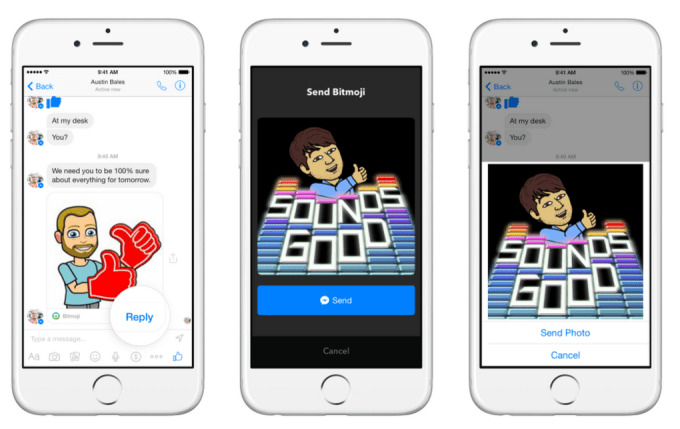
Using Facebook Messenger platform content apps
Having played with a few of the Messenger content apps, they’re definitively not things Facebook would build. There are slews of goofy GIF makers, ways to layer cartoony animations or special effects over you photos, or record lip-sync videos.
That’s the whole idea, though. To each their own Messenger app.
More serious adults might like sharing ESPN clips, while kids will prefer creating custom emoji. As Zuckerberg noted “People need to be able to share what matters to them with all the different groups of people they care about this is how we give people the power to make the world more open and connected.”
It’s an approach similar to the monolithic chat apps of Asia, like WeChat and Line. By letting other apps build companion experiences, they strengthen the community around their core apps.
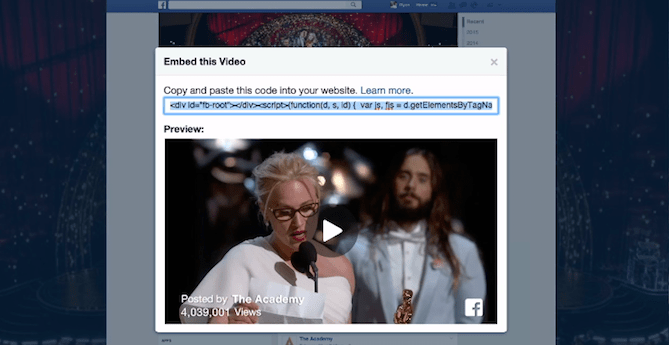
F8 also unveiled more ways to join the family. Websites can now integrate a revampedreal-time Facebook comment widget that entrenches the company’s identity system. They can syndicate Facebook videos with a new embedded video player, using extra views to lure publishers into posting their content on Facebook. And businesses can start communicating with customers via Messenger.
Keeping The Family Together
While the Messenger platform made big waves today, it didn’t exactly have the most prestigious launch partners. Only a few of the developers that built Messenger apps, like Giphy, Imgur, and JibJab, already had a healthy following. The question will be whether brand-name companies will want to build a dedicated Messenger companion app to be adopted by Facebook.
As Andreessen Horowitz partner and mobile expert Benedict Evans wisely noted:
When more apps get built for Messenger, the discovery benefit of the curated platform will diminish. And if these apps don’t see business advantages from being a Messenger companion, like getting downloads of their main apps, they might not bother to build or maintain another set of code.
Keeping partners loyal and feeling valued has been sore spot for Facebook in the past.
 It cratered game companies like Zynga when it reduced virality on its web platform. News reader apps from The Guardian and Wall Street Journal got burned when the News Feed stopped promoting them. Facebook has copied features of apps built atop it. Platform whiplash rocked developers as Facebook rapidly changed its APIs around 2009. Facebook’s little-known HTML5 app platform was abandoned soon after birth. Now, Page admins are up in arms as their News Feed reach decreases.
In an attempt to repent, started “Operation Developer Love”. Last year’s F8 motto was “Move Fast With Stable Infra”, an update to its less mature slogan “Move Fast And Break Things”. It instituted a one-year API stability guarantee, and has since stressed transparency around News Feed changes.
When I asked how Messenger will make developers feel valued during Messenger head David Marcus’ F8 panel Q&A, he insisted “The beauty of the platform is that developers get attribution. If your friends are using apps and sharing content with you, you’re able to download the app and share with more friends.”
But the sour taste of unreliability is hard to wash out of developers’ mouths, and some virality now might not be enough. Zuckerberg concluded that “Moving from a single service to a family of world-class apps is the biggest change we’ve made in years.”
If Facebook wants to keep the family together, it will have to prove its commitment to partners. The company has consistently countered developer and marketer complaints by saying it prioritizes what’s best for its end users. If the audience gets burned by spam, outdated functionality, or annoying marketing posts, there won’t be anyone left to use Facebook’s partner apps in the future.
But just like a real family, even if you do have favorites, you can’t say that aloud.
When Facebook was just a young bachelor, cavorting around colleges, it didn’t have to worry about anyone but itself. But it’s entering a new life phase with new responsibilities, and it will have to balance its affection for users, advertisers, developers, and its own bottom line. Family isn’t always easy, but its the only way Facebook’s legacy will live on.
Comments
Post a Comment